Is it Time to Expand? 5 Signs You're Ready to Grow Your Business
Author
December 09, 2025

Thinking about opening a second location? It's the "Friday Night Lights" moment for a Texas entrepreneur, the big game you've been working toward. The success of your first location has you busy, profitable, and wondering what's next. But this is where the real challenge begins. The question of when to expand your business is less about ambition and more about a cold, hard assessment of your readiness.
Most advice on this topic is dangerously generic. It tells you to "look at your profits" and "have a good team." But for an independent Texas owner, expansion is a high-stakes bet. A new lease, massive debt, and the terrifying risk of stretching your "magic" too thin can kill the cash cow that got you here.
The truth is, the safest, smartest planning for business growth doesn't start with a new location. It starts with proving you can "expand in" before you expand out. Before you double your risk, you must be certain you have a scalable system, not just a busy room. The real signs you're ready aren't just about being busy; they're about being replicable.
Pressed for time? Here’s the gist:
- Don't Confuse "Busy" with "Ready." Being profitable and turning away customers is a good problem, but it isn't a sign you're ready to expand. It might just mean you're inefficient.
- Maximize Your First Location First. The smartest way to fund a second location is by finding the "hidden" revenue in your first. The real first step is mastering your revenue-per-square-foot.
- Systems, Not Superstars. Your "magic" must be a teachable system. If your business only works when you or your one "rockstar" manager is there, you don't have a scalable business; you have a high-stress job.
- Stress-Test Your Cash Flow. Can your business survive a 30% drop in sales and fund a new location's build-out? If not, you're not ready.
- Your Brand is the Real Asset. A true sign of readiness is when your brand becomes a "destination" that people will follow, not just a convenient location.
The "Obvious Signs" That Aren't the Full Story
You've seen the national articles. They list a few "obvious" indicators that it's time to grow and expand. While these aren't wrong, they are dangerously incomplete for an independent Texas owner.
You're Profitable and Turning Away Customers
This is the number one sign on every generic list. Yes, consistent profit and high demand are the entry tickets to the conversation. But "busy" can be a trap. It might be masking inefficiencies or low prices. Are you really at capacity, or is your kitchen disorganized? Are you turning away customers because you're full, or because your service is slow? This is a sign of stress on your current model, not proof that the model is ready to be copied.
Your Team is Solid and You're Running Out of Space
Having a great team and a full house is a fantastic problem. But here is the critical question: Do you have a solid team or a solid system?
If your business's entire "vibe" and success rest on you or one superstar manager, you're not ready. You've only proven that one person is scalable, and you're about to find out how to manage rapid business growth by trying to clone them, which is impossible. The real test is whether your "C-team" can run the business for a week using your processes and still deliver an "A-grade" experience.
The 5 Real Signs You're Ready for Texas Expansion
The true test of when to expand your business is about scalability. Here are the five signs you're really ready.
1. You've Mastered Your Current Revenue-Per-Square-Foot
Before you take on the massive risk and debt of a second lease, the smartest owners find the "hidden" revenue in their first location.
Look at your floor plan. Do you have "dead zones"? Are you maximizing your layout for profit? Answering this question is a critical part of knowing how to create a layout that keeps guests coming back.
The safest "expansion" is one that costs you almost nothing. By focusing on increasing average patron dwell time, you can dramatically boost sales without adding a single chair. When patrons are engaged and entertained, they stay longer and spend more. This is the "flow state" secret to keeping customers longer.
As experienced partners to Texas venues, Peak Entertainment helps owners find this hidden revenue. Adding high-engagement, compliant skill games can turn an empty corner into a profit center, boosting dwell time and generating a new revenue stream. Mastering this proves your model and funds your next big move.
2. Your "Magic" Is Now a Teachable System
This is the core of what business scalability is. Your "secret sauce" can't be a secret. It must be a set of Standard Operating Procedures (SOPs).
Can a new employee learn the "magic" from a checklist? From the way you greet patrons to the closing-night cash-out, your entire operation must be documented, teachable, and repeatable. If you can't hand a binder to a new manager and trust that 90% of the operation will run flawlessly, you're not ready to replicate the business. Your "magic" must be a process, not a personality.
3. You've Built a Scalable Model (Not Just a Busy Job)
This is the hardest transition for an owner. Can your business run profitably for a full week without you?
If you are still the chief problem-solver, cook, or manager, you don't own a business; you own a high-stress job. And you're about to apply for a second one. This is the difference between learning how to scale a restaurant business and just opening another restaurant. The same goes for retail business growth. A scalable model has a clear leadership structure, delegated responsibilities, and systems that empower your team to make decisions without you.
4. You've "Stress-Tested" Your Cash Flow for a Texas-Sized Winter
This is the Texas-specific gut-check. "Consistent cash flow" sounds great, but what about when an ice storm shuts down Dallas for a week? Or when the summer slowdown hits your Austin college-town location?
A new location will drain cash for 6-12 months. Your original location must be profitable enough to not only support itself but also to weather its own emergencies while funding the new venture. Run the numbers: Can you survive a 30% drop in sales at Location #1 and cover the payroll for Location #2? If the answer is "maybe," you're not ready.
5. Your Brand is a "Destination," Not Just a "Location"
Here is one of the most important signs of a successful business: loyalty. Do people drive past two other competitors to get to you? Do they talk about your establishment by name? This is the essence of building a brand that Texas regulars crave.
If your success is built purely on a great location with good foot traffic, you're not expanding a brand; you're just rolling the dice on a new piece of real estate. A strong brand is what will pull customers into your new location from day one. Texas expansion is about building a brand that Texans love, not just another store.
The Bottom Line
The decision of when to expand your business is the ultimate test of your model. Don't let a busy room and a full cash register trick you into a premature, high-risk leap.
The smartest path to sustainable business growth is to "expand in" first. Maximize your current footprint. Prove you can increase revenue per square foot. Turn your "magic" into a teachable system. Build a model that runs without you.
When you've truly mastered your first location, it won't just be your cash cow, it will be the blueprint and the bank for your second.
Your Partner in Smart Growth
Ready to find the "hidden revenue" in your current location? Before you look for a new lease, let's look at your current floor plan.
Peak Entertainment is more than a vendor; we're a partner in profitability. We help Texas owners maximize their current space with high-engagement, compliant entertainment that boosts dwell time and increases revenue. Our team handles everything from professional machine installation and maintenance to secure cash management.
Let's explore how we can help you fund your future expansion by perfecting your current success. Contact us for a no-obligation consultation.
Frequently Asked Questions
1. What's the first step in planning for business growth?
The real first step is an internal audit. Before looking at new locations, master your current one. Analyze your revenue-per-square-foot, document all your processes, and stress-test your cash flow to ensure you've maximized your current operation's efficiency and profitability.
2. What is business scalability, really?
Business scalability is your company's ability to grow without being hampered by its existing structure. In practical terms, it means your business can handle a significant increase in customers and revenue without a proportional increase in costs or complexity. This is achieved through teachable systems and processes, not just by hiring more people.
3. How do you know if a business is doing well enough to expand?
"Doing well" is more than just being profitable. It means you have consistent profit margins, strong positive cash flow, a loyal customer base that isn't dependent on your personal presence, and a team that operates flawlessly from a documented playbook. It's when the system is successful, not just the owner.
4. What are the biggest risks of expanding a small business?
The top three risks are:
- Cash Flow Drain: Underestimating the capital needed to build, stock, and operate a new location, which starves both the new and original locations of cash.
- Operational Failure: Stretching your "A-team" too thin and failing to replicate your "magic," leading to a poor customer experience at the new location.
- Brand Dilution: Expanding too quickly or into the wrong market can damage the reputation and "special" feel of your original brand.
5. How can I increase revenue in my current location before expanding?
Focus on two key metrics: average customer spend and customer dwell time. You can increase revenue by strategically adjusting your layout, optimizing your menu or product mix, and adding engaging in-venue entertainment that encourages patrons to stay longer. Every extra 15 minutes a customer stays engaged can lead to a significant increase in their total spend.
6. What is sustainable growth for a small business?
Sustainable business growth is a "grow-and-expand" strategy that is repeatable, profitable, and doesn't put the core business at risk. It's about scaling at a pace that your cash flow and systems can handle. It's the opposite of rapid, "growth-at-all-costs" expansion, focusing instead on long-term stability and profitability.
More Into
Announcements
Turning Convenience Store Foodservice Wait Into Value
Convenience store foodservice keeps growing because customers want it.

Trivia Night vs. a Skill Game Machine: What It Really Costs
Every slow-night article says the same thing: run trivia.
Why Convenience Store Profit Margins Depend on Experience
A rival's price sign drops ten cents overnight. You can't match it and stay open.
Behind the Rise of Gas Station Skill Games in Texas
Fuel-only visits leave little time to sell. A driver pumps gas, taps a card, and pulls out.

Every Dead Corner Idea for Texas Bars, Ranked and Compared
That corner by the hallway sits empty every night. A pool table used to be there. Nobody replaced it
Improving Workplace Culture: Managing Burnout in Texas Bars
Running a single-location bar or retail spot in Texas is a high-stakes balancing act.
Stop Micromanaging: Guide to Bar Manager Duties and Responsibilities
Move from constant supervision to strategic oversight in three distinct phases.

Seating for Success: How Bar Stool Comfort Drives Sales
Bar stool is a piece of equipment that can simultaneously speed up a tab or kill a customer’s night.

Reclaiming Your Sanity: The Texas Owner’s Anti-To-Do List
True leadership is not about doing every job. It is about building a machine that runs without you.

How to Make Your Business Stand Out in a Crowded Texas Market
This guide will show how to make your business stand out by uncovering the unique advantage you have

Service vs. Hospitality: The Secret to Customer Loyalty
Is your business a vending machine or a living room?
How to Increase Convenience Store Sales: A Texas Owner's Guide
If you want to understand how to increase convenience store sales, you must plug that leak.

The "Flow State" Secret to Keeping Customers Longer
That blue light is the single biggest drain on your per-patron revenue, and it’s time to fight back.

A Texas Bar Owner's Guide to Conquering Business Owner Burnout
That feeling of constant exhaustion, cynicism, and the nagging sense that you have to do everything.

How a Skill Game Machine Brings in New Faces (Not Just Regulars)
If you run a bar or restaurant in Texas, you know the comfort of familiar faces.

Is Skill-Based Gaming Right for Your Business? Get the Answer Now.
It’s easy to think skill-based gaming machines are a slam-dunk for every Texas business.

How Skill-Based Gaming Fits Naturally Into Bar Culture
Skill machines are popping up in local venues, and they’re not just earning attention.
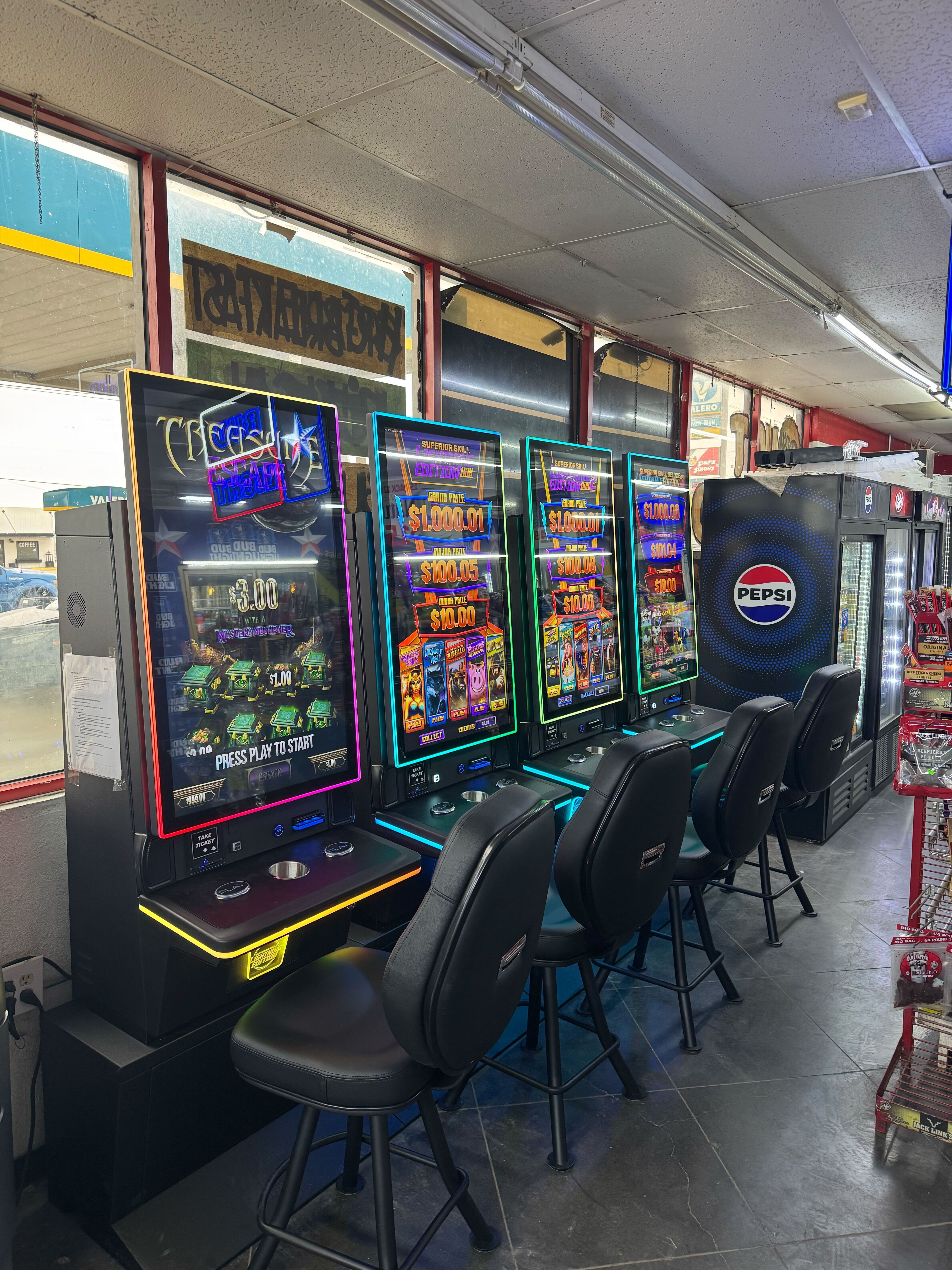
Skill-Based Gaming in the Inflation Era: Earn Passive Revenue
Inflation continues to hit small and mid-sized businesses hard.

Why Skill Based Gaming Machines Are Boosting Guest Retention
Businesses across Texas, especially in Dallas, are turning to a modern solution: skill-based gaming
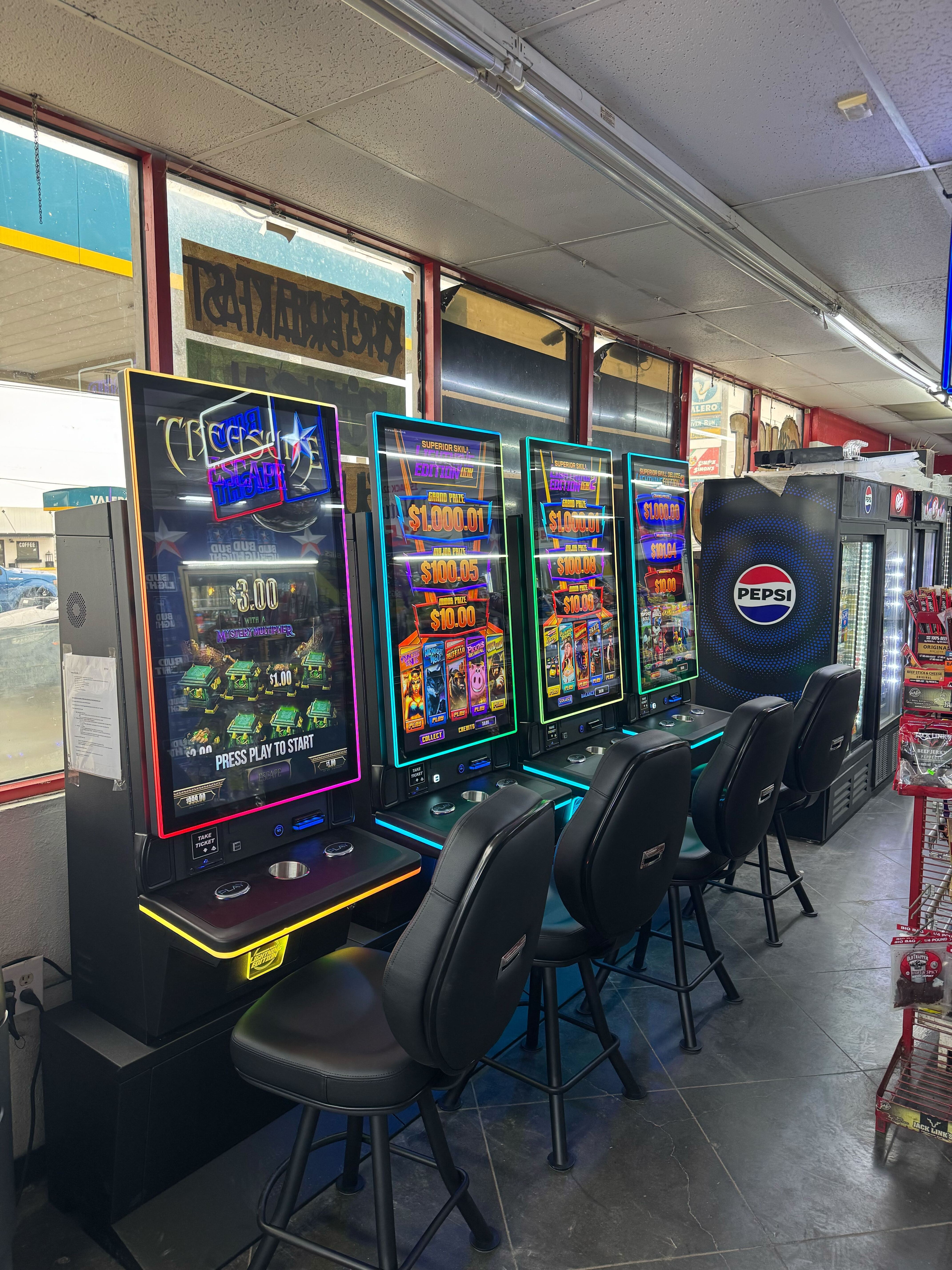
Truck Stops Are the New Hotspot for Texas Skill Games
Across Texas, truck stops are evolving into prime destinations for skill-based gaming
How Gaming Machines Can Turn Waiting Customers into Buyers
The concept: often called "dwell time", play a major role in sales psychology.
Inside Slot Machines: Mechanics & Winning Potential
Did you know that modern slot machines process over 1000 mathematical calculations per second?

How Gamification Transforms Hospitality for Small Businesses
Gamification has emerged as a game-changer in the hospitality industry.
Ready to partner with us?

Contact
(+1) 855-484-1400
contact@peakentertainment.com
sales@peakentertainment.com
Follow us


Peak Entertainment © All Rights Reserved • Terms of Use • Privacy Policy