Why Convenience Store Profit Margins Depend on Experience
Admin
September 08, 2026
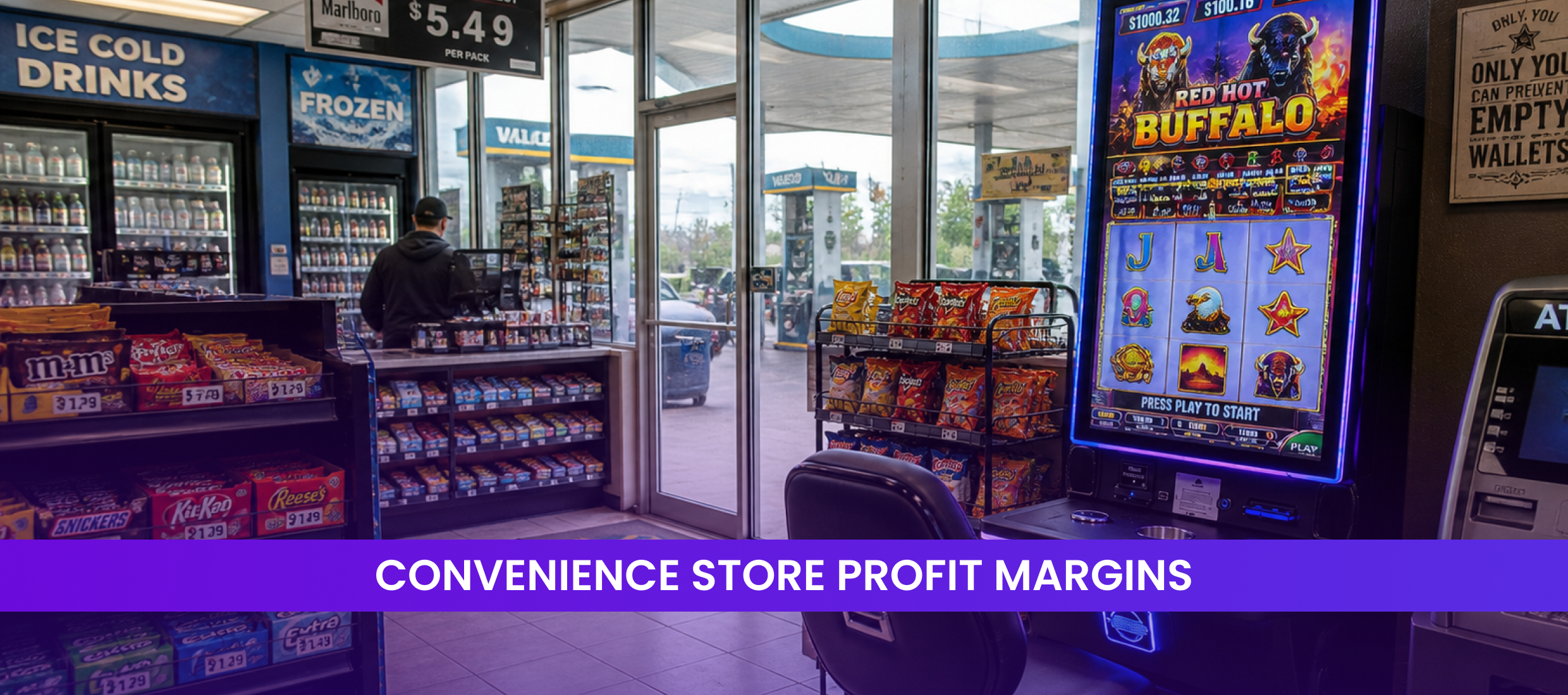
A rival's price sign drops ten cents overnight. You can't match it and stay open.
That's the trap built into convenience store profit margins. Fuel is thin industry-wide, and every price cut a competitor makes shrinks the thinnest part of your business further. The real fight for a Texas c-store owner isn't at the pump. It's what happens after a customer parks.
Pressed for Time? The Gist on Convenience Store Profit Margins
- Fuel is a losing fight: Convenience store profit margins take the hit first when price wars break out at the pump.
- Chains win on food, not fuel: National brands protect margin through in-store food and beverage programs most independents can't build.
- Experience is the lever you control: You can't out-price a chain, but you can give customers a reason to stay once they're inside.
- Skill gaming closes the gap fast: A skill game machine adds an experience layer without a kitchen remodel or new hires.
- It shows up in daily traffic: The advantage plays out one visit at a time, not one price cut at a time.
Convenience Store Profit Margins and the Price War You Can't Win
Convenience store profit margins get squeezed hardest at the pump. Fuel is thin industry wide. That's not a bad month. It's the business.
Matching a competitor's price cut doesn't fix that math. It only moves the squeeze onto your side of the register. Pricing at a chain's fuel level often means selling near cost on the one product with no room left to give.
A price war doesn't stay contained to the fuel island either. Every price cut ripples into what's left over for everything else the store has to cover. It can shrink a margin that was already thin to something close to nothing. That math doesn't forgive a bad month.
The Real Math Behind Fuel Pricing
Every gallon sold near cost eats into what's left for everything else. Payroll, insurance, and inventory don't get cheaper because gas did. Cutting price to chase a competitor's traffic trades a real cost for a maybe.
That's the whole problem in one line. Price is a fight with no floor. There's always a competitor willing to go lower for one more day, one more week, one more slow season, and an independent store can't out-loss a business with deeper reserves. Winning that fight for a week doesn't win it for a year.
What Chains Do That Independents Can't Copy
National chains stopped competing on fuel years ago. They protect margin with food instead. Breakfast menus, custom hoagie lines, and expanded beverage programs all do the same job, turning a fuel stop into a destination regardless of what the sign outside says.
Health-focused snack sections, made-to-order counters, and branded coffee programs all serve the same purpose. They give a customer a reason to choose one store over another that has nothing to do with the price at the pump. That reason becomes the whole competitive advantage.
Independent stores can't build that kind of program. Building a commercial kitchen means new equipment, more staff, and health permits most single-location owners don't have room for. Add the labor to run it well, and a food program stops looking like an answer and starts looking like a second business layered on top of the first.
The gap between what a national chain can do and what an independent can do keeps widening. That gap isn't about effort or ambition. It's about capital, staffing, and time, three things most Texas c-store owners are already short on.
Experience Is the Lever You Actually Control
You can't out-price a chain, and you can't out-build one either. What you can control is what happens in the minute after someone walks through your door. That's the piece within reach.
Floor space that sits empty is a cost, even when nothing about it shows up on a receipt. An empty corner near the register isn't helping the store compete on anything. Filling that space with something worth a customer's attention costs far less than a kitchen ever would.
An outside partner can add that layer without adding to your workload. Peak Entertainment installs, maintains, and supports the equipment directly, and how Peak operates day to day means none of that lands on your staff. No new job duties, no new training beyond the basics, no equipment sitting unused because nobody had time to learn it.
Why Skill Gaming Fits This Specific Problem
A skill game machine gives customers something to do while they decide to stay. Building a food program takes months to plan, staff, and permit. This doesn't.
No new hires. No new licenses to chase. Because the installation process is handled start to finish by the operator, a store can add this layer of experience in days, not months.
Every week of delay is another week spent losing the price fight instead of stepping out of it. Under the revenue sharing model, there's no upfront cost, which matters when margins are already this tight. The equipment goes in, gets maintained, and either earns its floor space or it doesn't, with no large investment riding on the outcome either way.
What This Looks Like in a Texas Convenience Store
Picture a Texas c-store off a state highway on a slow weekday afternoon. One customer stops for fuel and a drink. Normally, that's the whole visit.
A skill game machine near the register changes that math. It gives the visit a reason to run longer than a fill-up and a grab-and-go snack.
Those extra minutes at the register often become a second purchase. Maybe a bag of chips, a second drink, something that wouldn't have happened on the way back to the car.
The same shift plays out with regulars, not just highway traffic. Someone who stops every morning for coffee has a reason to linger for a few minutes instead of grabbing the cup and leaving immediately. Over a month, those few extra minutes per visit add up to real time spent inside the store, near the shelves, past the impulse buys at the register.
Placement inside the store matters as much as the decision to add one at all, which is why some setups outperform others even with the same equipment. This is the same logic behind the cost pressure argument for any small Texas business squeezed by thin margins, not just fuel. A quick gut check on whether your venue is ready usually starts with traffic volume and register visibility. Most c-stores already have both, without changing a thing about how the store runs.
The Piece Independent Stores Can Actually Add
Cleanliness, staff, and a decent food case still matter as much as ever. For a full walkthrough of those fundamentals, the full convenience store playbook covers the rest of what a c-store can do beyond this. Experience is simply the piece most owners skip, because it looks harder to add than it actually is.
None of this requires waiting for a bigger remodel budget or a slower season to plan around. Whenever the timing is right, you can reach out directly to talk through what a setup like this would look like in your store.
Frequently Asked Questions
1. Does cutting prices further help a convenience store compete?
Not usually. Fuel margins are already thin industry-wide, and matching a competitor's price cut trades one razor-thin margin for an even thinner one. The stores holding steady are the ones that stopped trying to win at the pump.
2. Is a skill game machine a realistic alternative to a food program?
Yes, for stores that don't have the space, staff, or budget for a full kitchen build-out. The machine adds an experience layer in days, without new equipment, permits, or hires. It won't replace a strong food case, but it closes a meaningful part of the gap.
3. Does experience still matter for a c-store with heavy fuel traffic already?
Yes, arguably more. High fuel traffic without an in-store draw means most of that traffic never becomes a second sale. The busier the pumps, the more upside there is in giving people a reason to walk inside.
4. What does competing on experience actually look like day to day?
It's less one big change and more what happens in the first minute after someone walks in. Something to do near the register, like a skill game machine, turns a quick stop into a slightly longer one. Small, repeatable moments add up over time.
5. How fast does an experience-based change like this show results?
There's no fixed timeline. It depends on foot traffic and how visible the setup is inside the store, and it tends to be a gradual shift in daily visits rather than a single turning point.
6. Does this still work for a store on a slower, low-traffic corridor?
Yes, though the upside scales with existing foot traffic. Slower corridors still benefit from turning occasional visitors into regulars, even if the volume is smaller than a high-traffic location. The core logic holds regardless of where the store sits.
More Into
Announcements
Turning Convenience Store Foodservice Wait Into Value
Convenience store foodservice keeps growing because customers want it.
Trivia Night vs. a Skill Game Machine: What It Really Costs
Every slow-night article says the same thing: run trivia.
Behind the Rise of Gas Station Skill Games in Texas
Fuel-only visits leave little time to sell. A driver pumps gas, taps a card, and pulls out.
Every Dead Corner Idea for Texas Bars, Ranked and Compared
That corner by the hallway sits empty every night. A pool table used to be there. Nobody replaced it
Improving Workplace Culture: Managing Burnout in Texas Bars
Running a single-location bar or retail spot in Texas is a high-stakes balancing act.
Stop Micromanaging: Guide to Bar Manager Duties and Responsibilities
Move from constant supervision to strategic oversight in three distinct phases.

Seating for Success: How Bar Stool Comfort Drives Sales
Bar stool is a piece of equipment that can simultaneously speed up a tab or kill a customer’s night.

Reclaiming Your Sanity: The Texas Owner’s Anti-To-Do List
True leadership is not about doing every job. It is about building a machine that runs without you.

Is it Time to Expand? 5 Signs You're Ready to Grow Your Business
Thinking about opening a second location?

How to Make Your Business Stand Out in a Crowded Texas Market
This guide will show how to make your business stand out by uncovering the unique advantage you have

Service vs. Hospitality: The Secret to Customer Loyalty
Is your business a vending machine or a living room?
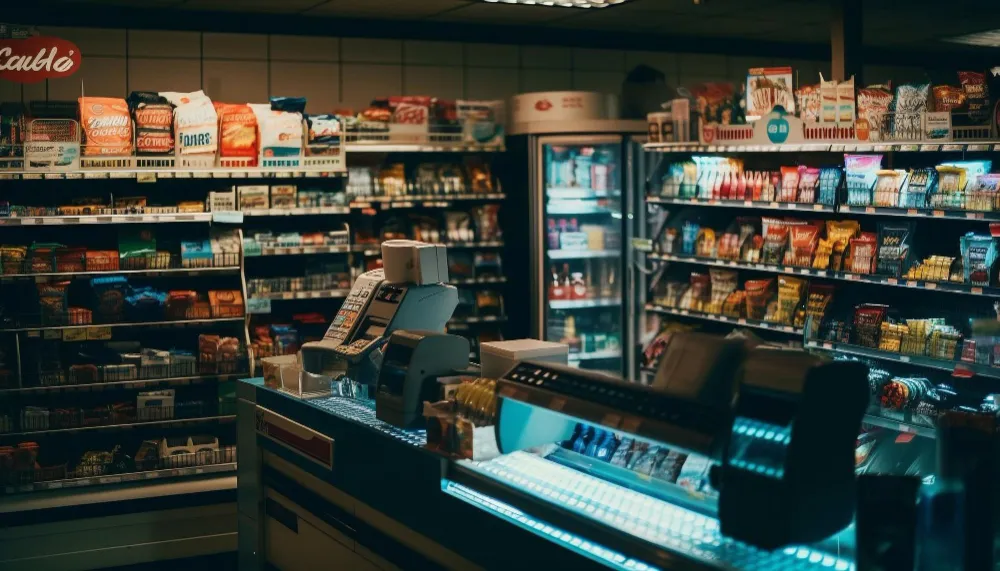
How to Increase Convenience Store Sales: A Texas Owner's Guide
If you want to understand how to increase convenience store sales, you must plug that leak.

The "Flow State" Secret to Keeping Customers Longer
That blue light is the single biggest drain on your per-patron revenue, and it’s time to fight back.

A Texas Bar Owner's Guide to Conquering Business Owner Burnout
That feeling of constant exhaustion, cynicism, and the nagging sense that you have to do everything.

How a Skill Game Machine Brings in New Faces (Not Just Regulars)
If you run a bar or restaurant in Texas, you know the comfort of familiar faces.

Is Skill-Based Gaming Right for Your Business? Get the Answer Now.
It’s easy to think skill-based gaming machines are a slam-dunk for every Texas business.
How Skill-Based Gaming Fits Naturally Into Bar Culture
Skill machines are popping up in local venues, and they’re not just earning attention.
Skill-Based Gaming in the Inflation Era: Earn Passive Revenue
Inflation continues to hit small and mid-sized businesses hard.

Why Skill Based Gaming Machines Are Boosting Guest Retention
Businesses across Texas, especially in Dallas, are turning to a modern solution: skill-based gaming
Truck Stops Are the New Hotspot for Texas Skill Games
Across Texas, truck stops are evolving into prime destinations for skill-based gaming
How Gaming Machines Can Turn Waiting Customers into Buyers
The concept: often called "dwell time", play a major role in sales psychology.
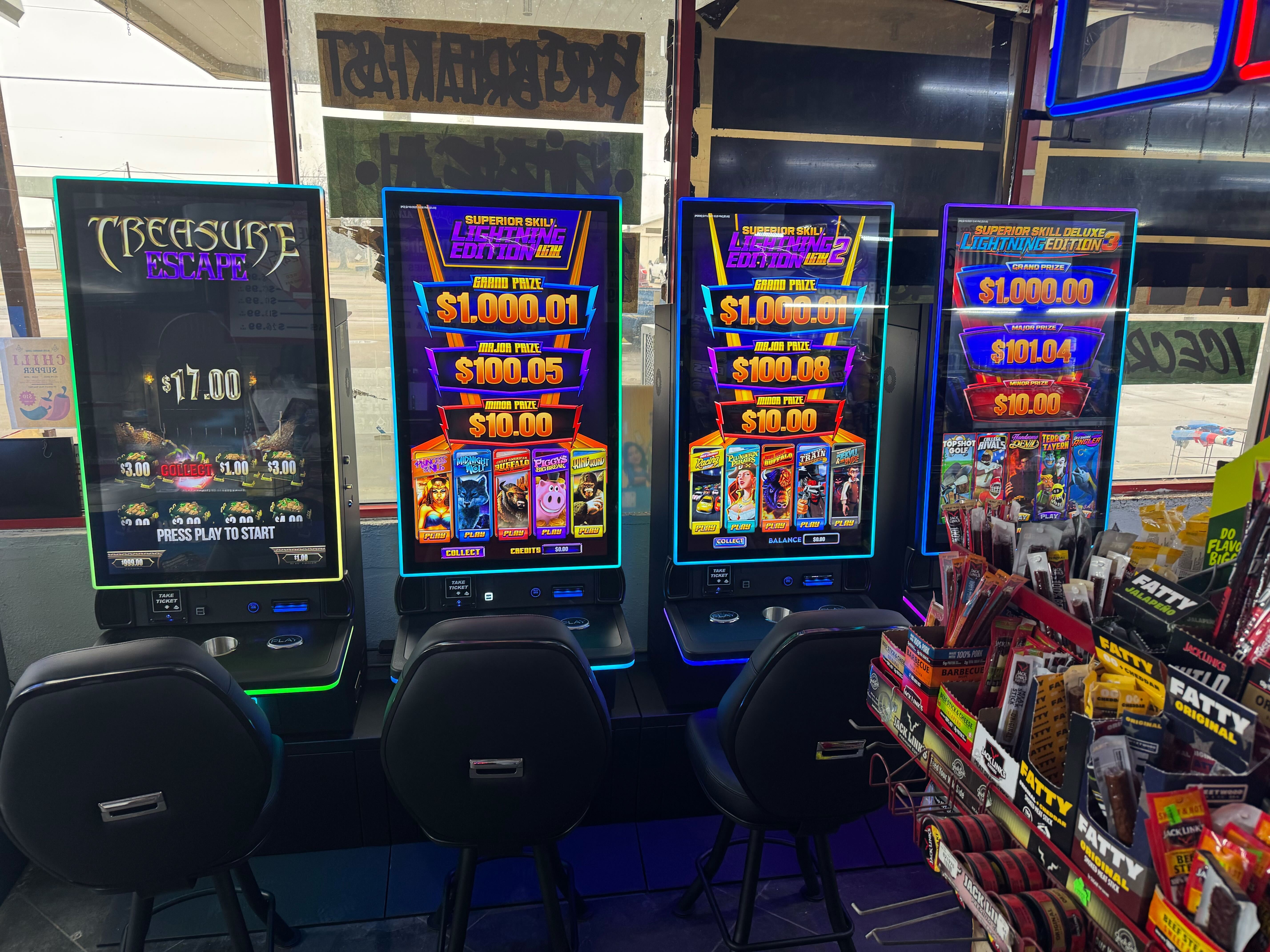
Inside Slot Machines: Mechanics & Winning Potential
Did you know that modern slot machines process over 1000 mathematical calculations per second?
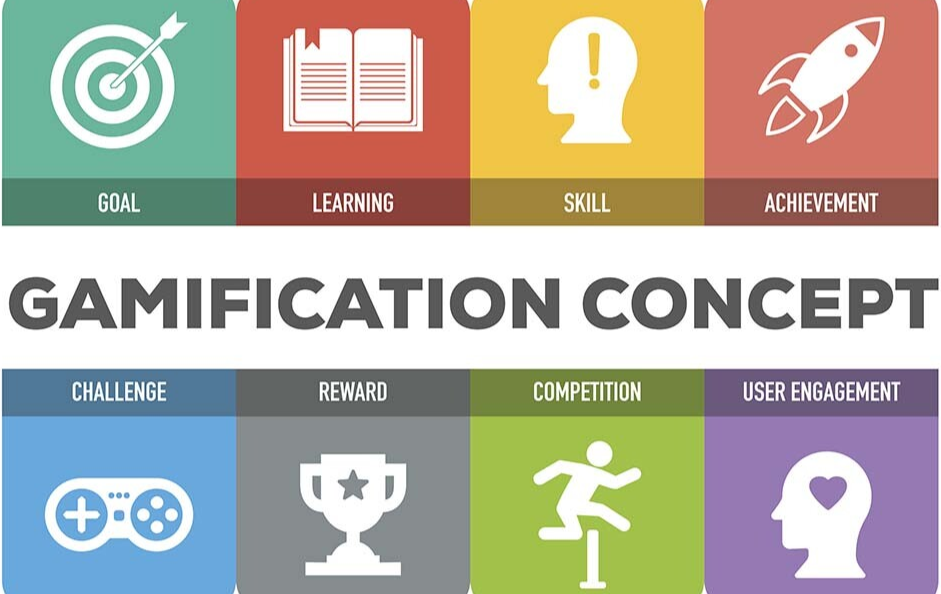
How Gamification Transforms Hospitality for Small Businesses
Gamification has emerged as a game-changer in the hospitality industry.
Ready to partner with us?

Contact
(+1) 855-484-1400
contact@peakentertainment.com
sales@peakentertainment.com
Follow us


Peak Entertainment © All Rights Reserved • Terms of Use • Privacy Policy