Trivia Night vs. a Skill Game Machine: What It Really Costs
Admin
September 15, 2026
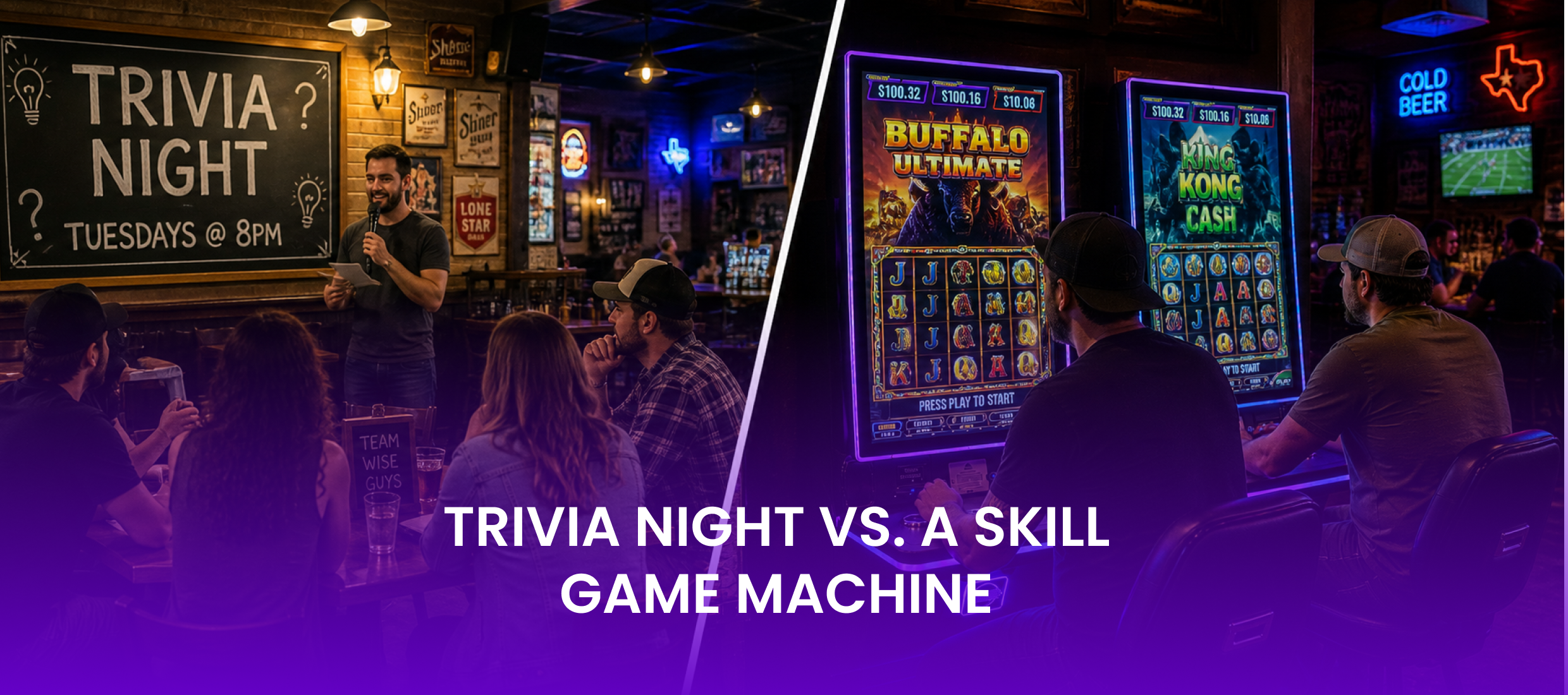
It's 8 pm on a Tuesday. Three regulars nurse beers at an empty bar.
Every slow-night article says the same thing: run trivia. That's fair advice, and it's also incomplete, because trivia costs something most independent bars are already short on: a person.
A skill game machine solves a different problem on that same slow night. It doesn't need a host, a script, or a weekly time slot to work.
Here's what each option actually costs a Texas bar, laid out plainly. Pick with your eyes open instead of guessing which one everyone else says to try.
Pressed for Time? The Gist on Trivia Night for Bars
- Trivia night runs on people, not just an idea. It needs a host, a weekly slot, and someone promoting it.
- A skill game machine runs on its own. No host, no calendar, no weekly setup required.
- Neither option is wrong. The honest question is what your bar can staff, not which one wins.
- The two costs sit on different axes. Trivia costs time every week; a machine costs floor space once.
- Plenty of Texas bars use both. They solve different nights and different problems.
What Trivia Night Costs Texas Bars
Trivia night starts with a host. Someone has to write questions, keep score, and run the mic every single week, without fail.
That person has to show up on schedule. If they're sick, traveling, or simply done after six months, the night falls apart, and there's no backup plan.
Writing a fresh round takes real prep time too. A host pulling questions from memory or a random app loses the crowd fast, and a stale format shows within a few weeks.
Trivia also needs promotion to build a following. A regular crowd doesn't appear on its own; it takes a weekly reminder online, a sign by the door, and word of mouth that takes months to land.
That's a lot to ask of a staff already stretched thin. Most independent bars don't have a spare hour a week for question-writing on top of everything else on the schedule.
None of that makes trivia a bad idea. Bars that commit to it well build something real: a standing date people plan their week around, month after month.
It makes trivia a commitment, though. Commitments take staff time your bar may not have room for on top of everything else already running that night.
Think about who actually owns that commitment at your bar. If the answer is "whoever's free that week," the format usually slips within a season, and the slow night comes right back.
What a Skill Game Machine Actually Costs
A skill game machine works where customers already linger. That's the starting condition. It doesn't create the crowd from nothing.
It needs an outlet and a sightline near the bar. Once it's placed, it runs itself every single night of the week, not just the one you scheduled and staffed.
Nobody has to write anything for it. Nobody has to show up early to set it up, and nobody has to promote it on a weekly cycle to keep interest alive.
That answers a real fear a lot of owners carry. Investing in something that sits idle, or breaks and stays broken, is exactly what keeps some bars from trying anything new at all.
Peak Entertainment installs the machine at no upfront cost and handles machine maintenance itself. The installation process is quick, and nobody on your staff manages it after that.
The trade-off is real too, and worth naming plainly. A machine takes floor space and a sightline decision, and some setups outperform others nearby based almost entirely on where it sits.
Get the placement wrong, and the machine sits ignored near the restrooms. Get it right, near the bar where people already wait and watch, and it earns its floor space every night of the week.
That's the entire ask on the machine side. Pick a spot, get it installed, and let it do the same job on a Monday that it does on a Saturday.
The Honest Comparison
Trivia night costs staff time every single week. A skill game machine costs floor space once, then very little attention after that.
Trivia builds a specific weekly crowd who plan their night around the event. A machine holds attention on ordinary nights when nothing at all is scheduled.
Trivia depends on one person showing up and staying sharp. A machine depends on nobody, which is exactly how it fits naturally into bars that already run lean on staff.
Not close, really. They're solving different problems for a different kind of Tuesday night, not competing for the same one.
One general pattern backs the machine side of this up. Industry research suggests interactive entertainment holds a customer's attention longer than passive options do, in bar and hospitality settings generally.
That's the whole case, really. Both try to turn empty seats into ones people stay in longer than they planned to.
Why Some Bars Should Do Both
"Both" is a legitimate answer here, not a hedge. Trivia can own one weeknight while a machine quietly covers every other night without extra planning.
This isn't the same logic as running a discount to fill seats on a slow night. That's a margin question on its own, and some promotions backfire quietly in ways worth understanding separately.
A bar with real floor space to spare usually has more than these two options anyway. Plenty of other ways to fill it exist if trivia and a machine both feel like too small a fix.
The point isn't picking a single winner between the two. It's matching the fix to what your bar can actually staff on any given night of the week.
A bar that already runs trivia doesn't need to drop it to add a machine. The two sit in different corners of the room and rarely pull from the same crowd on the same night, even on the busiest weeks.
Same problem, different fix.
Owners short on staff often assume they have to choose one path and stick with it. They don't. The two options can run side by side without either one competing for the same attention.
A bar that's already stretched thin on a Tuesday doesn't need a third project to manage. It needs one honest answer for that specific night, and a separate one for every other night of the week.
What This Means for Your Slow Nights
You don't have to guess anymore. Trivia costs a host and a promise. A skill game machine costs a sightline, then runs on its own after that.
Both are honest ways to fix a slow night. The right one depends on what your bar can actually staff, not which article you read first.
Neither option requires a leap of faith to try. Start with the one that matches what your team can realistically keep up with, and add the other later if the room still has space for it.
A slow Tuesday doesn't need a perfect answer right away. It just needs one honest fix that your bar can actually sustain past the first few weeks.
If floor space and a low-maintenance option sound like the better fit for your bar, reach out directly and talk through where a machine would actually go.
Frequently Asked Questions
1. Do trivia night and a skill game machine compete for the same customers?
Not usually. Trivia draws a planned crowd on one set night, while a machine holds attention on ordinary nights when nothing is scheduled. The two rarely compete for the same moment.
2. Does trivia night take more than just showing up to host it?
Yes. A consistent trivia night needs weekly promotion and a host who shows up on schedule, not just someone reading questions off a sheet once a month.
3. Does a skill game machine still need any promotion?
Not really. It works where customers are already standing or seated, so it doesn't depend on a weekly announcement to get used regularly.
4. Does dropping trivia night hurt a slow weeknight?
Depends on why customers came in the first place. If they came for trivia specifically, yes; if they came for the bar itself, a machine can hold that same night just as well.
5. Should a skill game machine sit near where trivia happens?
No. Trivia needs quiet enough for people to hear questions, while a machine works best in a sightline near the bar, away from the mic and speakers.
6. Does trivia night still work if the host cancels?
No. The night depends on that one person showing up. A skill game machine has no equivalent single point of failure, since nobody has to run it.
More Into
Announcements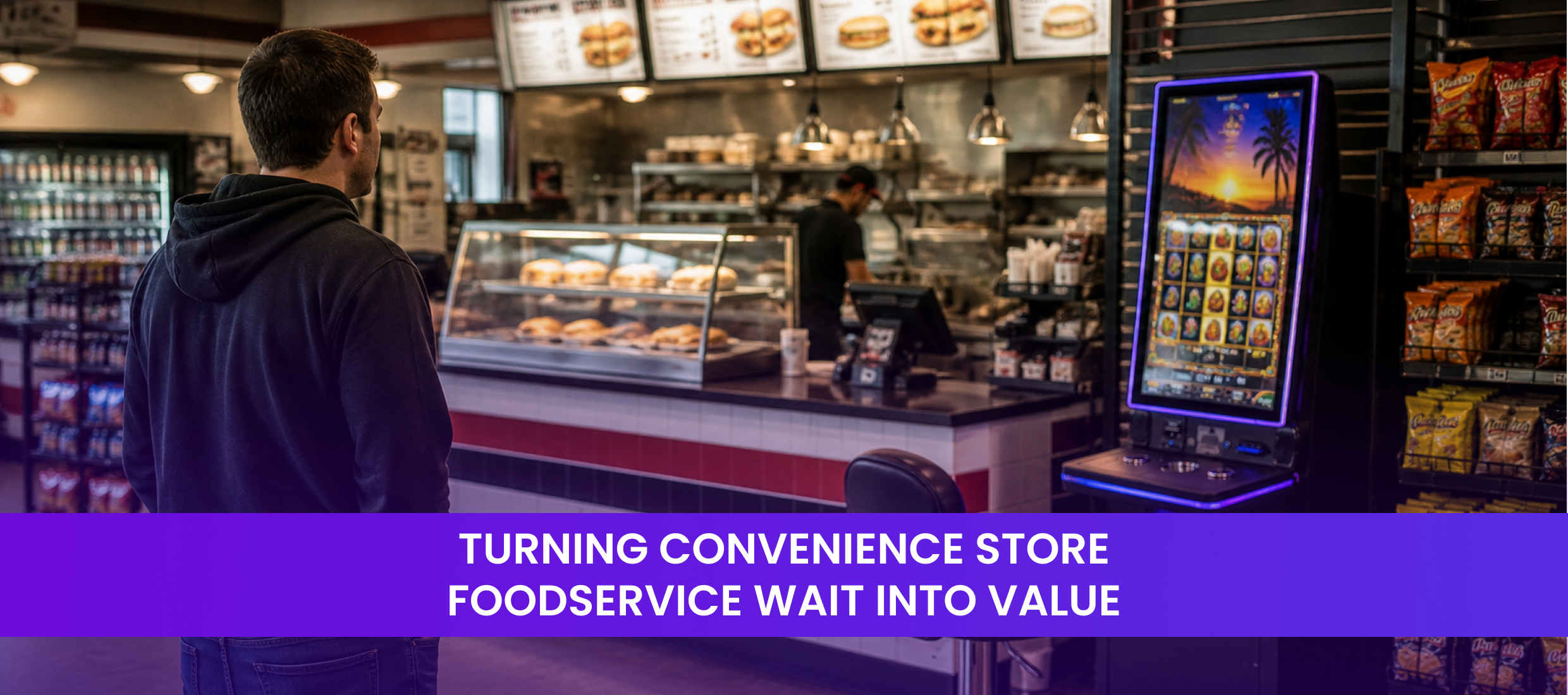
Turning Convenience Store Foodservice Wait Into Value
Convenience store foodservice keeps growing because customers want it.
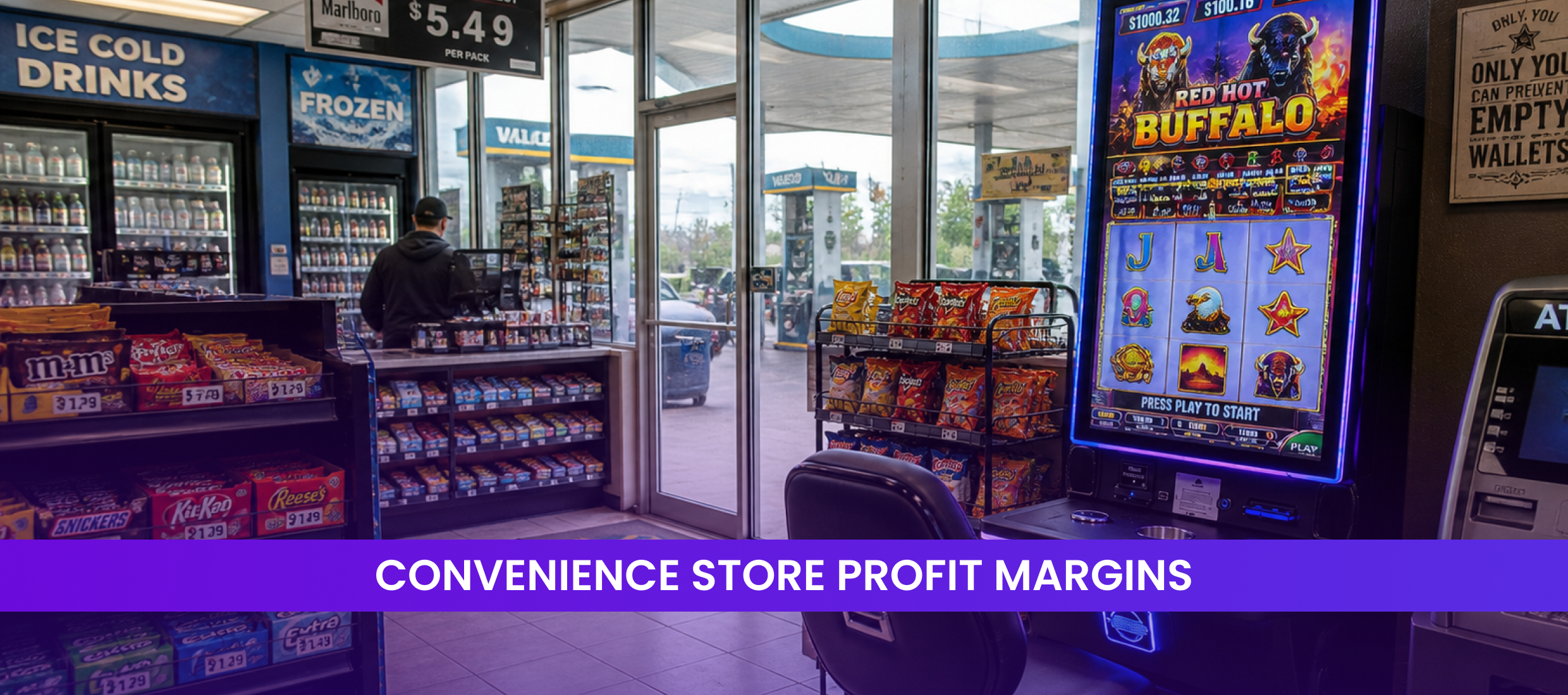
Why Convenience Store Profit Margins Depend on Experience
A rival's price sign drops ten cents overnight. You can't match it and stay open.
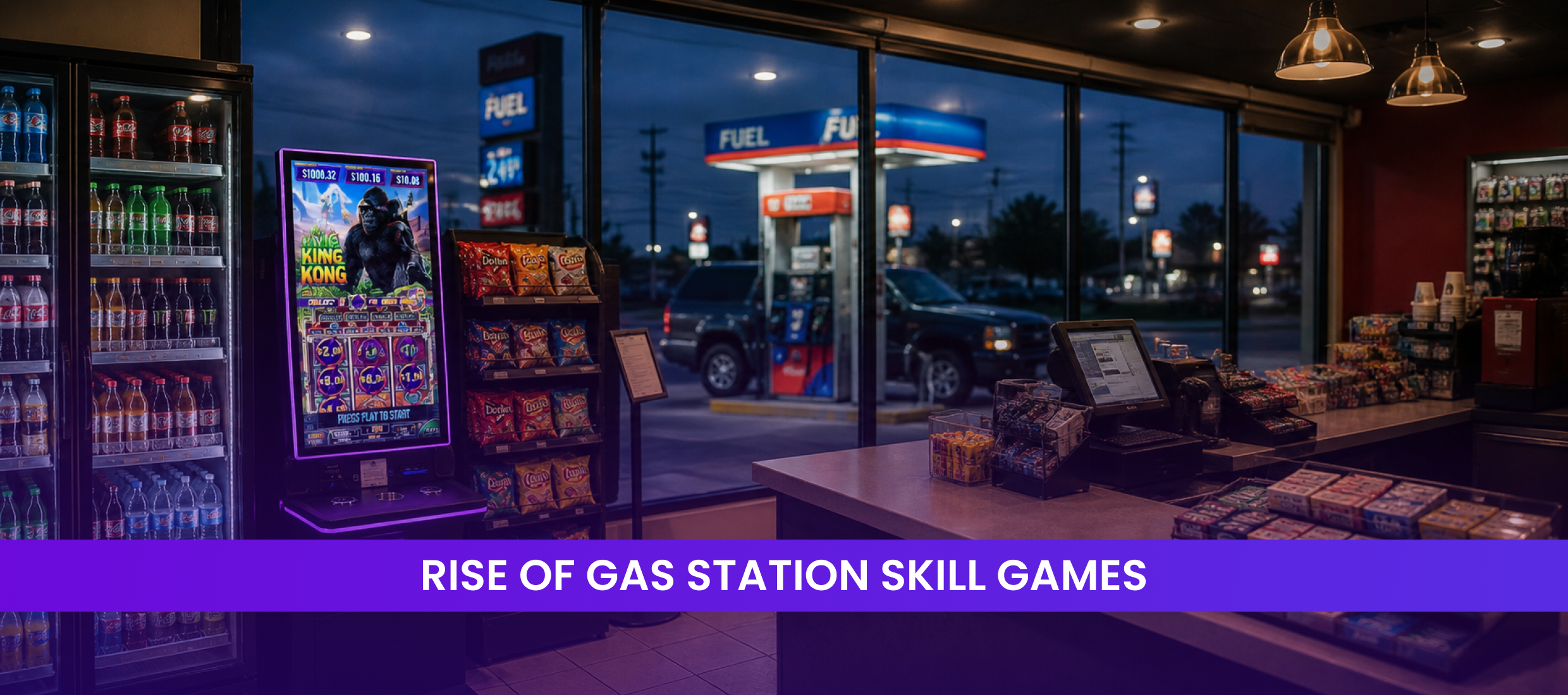
Behind the Rise of Gas Station Skill Games in Texas
Fuel-only visits leave little time to sell. A driver pumps gas, taps a card, and pulls out.
Every Dead Corner Idea for Texas Bars, Ranked and Compared
That corner by the hallway sits empty every night. A pool table used to be there. Nobody replaced it
Improving Workplace Culture: Managing Burnout in Texas Bars
Running a single-location bar or retail spot in Texas is a high-stakes balancing act.
Stop Micromanaging: Guide to Bar Manager Duties and Responsibilities
Move from constant supervision to strategic oversight in three distinct phases.

Seating for Success: How Bar Stool Comfort Drives Sales
Bar stool is a piece of equipment that can simultaneously speed up a tab or kill a customer’s night.

Reclaiming Your Sanity: The Texas Owner’s Anti-To-Do List
True leadership is not about doing every job. It is about building a machine that runs without you.
How to Schedule Staff Effectively During a Holiday Meltdown
It starts with a vibration in your pocket at 3:00 PM on a Friday in December.

Is it Time to Expand? 5 Signs You're Ready to Grow Your Business
Thinking about opening a second location?
Staff Recognition Ideas: Party, Bonus, or Perks That Work?
Do you give your team a check they'll forget by Jan, or throw a party they not even want to attend?
Build a Championship Bar Staff: A Fantasy Football Guide
What if fantasy football draft strategy held the secret to solving your biggest staffing headache?

How to Make Your Business Stand Out in a Crowded Texas Market
This guide will show how to make your business stand out by uncovering the unique advantage you have
Service vs. Hospitality: The Secret to Customer Loyalty
Is your business a vending machine or a living room?
How to Increase Convenience Store Sales: A Texas Owner's Guide
If you want to understand how to increase convenience store sales, you must plug that leak.

The "Flow State" Secret to Keeping Customers Longer
That blue light is the single biggest drain on your per-patron revenue, and it’s time to fight back.

A Texas Bar Owner's Guide to Conquering Business Owner Burnout
That feeling of constant exhaustion, cynicism, and the nagging sense that you have to do everything.

How a Skill Game Machine Brings in New Faces (Not Just Regulars)
If you run a bar or restaurant in Texas, you know the comfort of familiar faces.
What Texas Regulars Crave: A Guide to Customer Retention
Most content on customer retention strategies centers on loyalty programs or demographic guesses.
Is Skill-Based Gaming Right for Your Business? Get the Answer Now.
It’s easy to think skill-based gaming machines are a slam-dunk for every Texas business.
How Skill-Based Gaming Fits Naturally Into Bar Culture
Skill machines are popping up in local venues, and they’re not just earning attention.
Skill-Based Gaming in the Inflation Era: Earn Passive Revenue
Inflation continues to hit small and mid-sized businesses hard.
Why Skill Based Gaming Machines Are Boosting Guest Retention
Businesses across Texas, especially in Dallas, are turning to a modern solution: skill-based gaming
Truck Stops Are the New Hotspot for Texas Skill Games
Across Texas, truck stops are evolving into prime destinations for skill-based gaming
How Gaming Machines Can Turn Waiting Customers into Buyers
The concept: often called "dwell time", play a major role in sales psychology.
Inside Slot Machines: Mechanics & Winning Potential
Did you know that modern slot machines process over 1000 mathematical calculations per second?
How Gamification Transforms Hospitality for Small Businesses
Gamification has emerged as a game-changer in the hospitality industry.
Ready to partner with us?

Contact
(+1) 855-484-1400
contact@peakentertainment.com
sales@peakentertainment.com
Follow us


Peak Entertainment © All Rights Reserved • Terms of Use • Privacy Policy