Every Dead Corner Idea for Texas Bars, Ranked and Compared
Admin
August 11, 2026
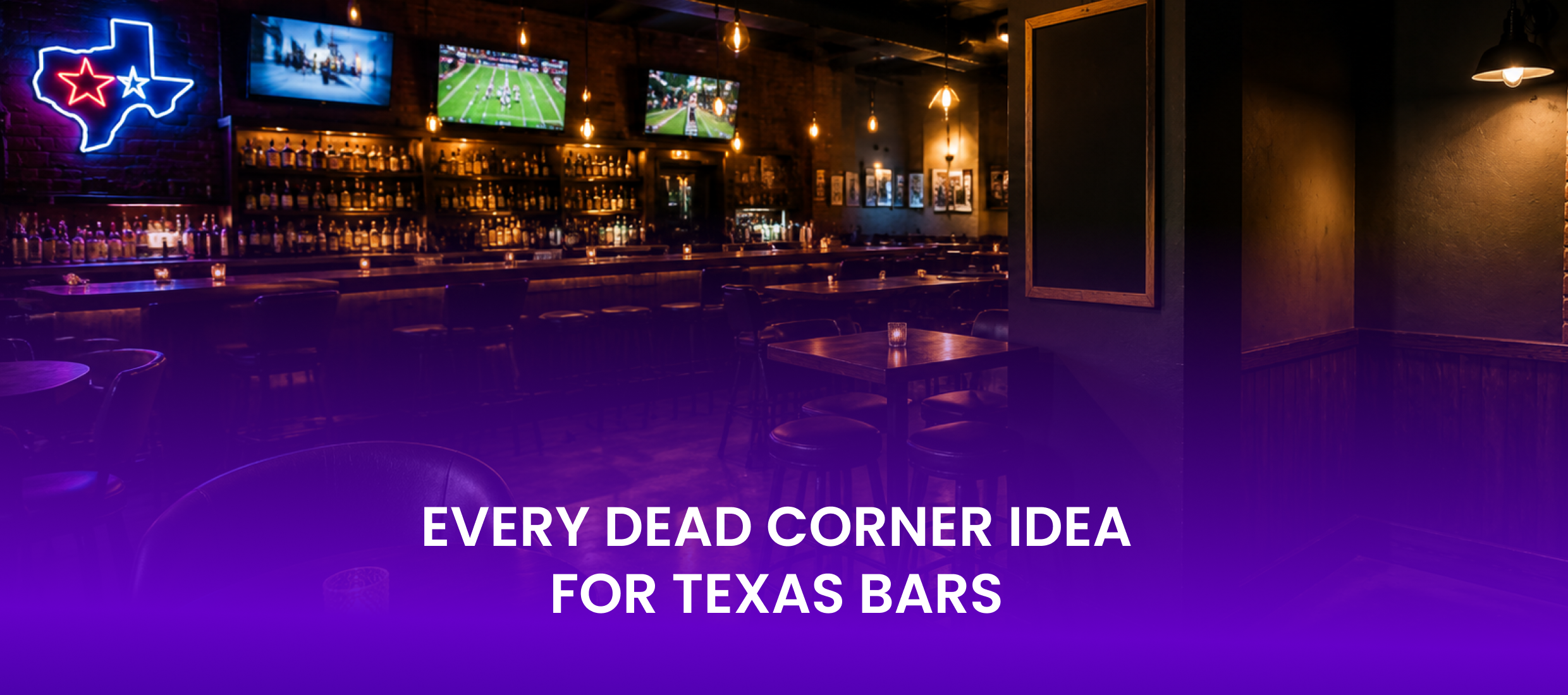
That corner by the hallway sits empty every night. A pool table used to be there. Nobody replaced it.
Every bar owner works through the same dead corner ideas eventually: a pool table, a jukebox, or a vending machine. Then the math shows up: what it costs, who maintains it, and whether it earns anything back.
This isn't one option dressed up as a list. It's a straight ranking of what fits that space. Every option gets judged against five things that actually matter to a Texas venue owner: upfront cost, space required, staff time, upkeep, and how reliably it pays off.
Pressed for Time? The Gist on Dead Corner Ideas
- Cost adds up fast: Pool tables and pinball machines carry real purchase or lease costs before they earn a dollar back.
- Staff time is the hidden cost: Vending machines look passive, but restocking and troubleshooting land on someone's shift.
- Not every option ages well: Felt wears, cue balls disappear, and dart machines need regular service calls.
- Chance-based machines carry extra risk: Anything where the outcome isn't determined by skill sits on shakier compliance ground.
- Skill gaming machines score well across the board: No upfront cost, vendor-handled upkeep, and a skill-based structure that holds up better under scrutiny.
Why Dead Space Costs More Than It Looks Like
Unused square footage isn't neutral. You're already paying rent or a mortgage on it, whether it earns anything or not. A dead corner is a fixed cost with zero return, every single month.
Owners often leave it alone because every fix looks like a risk of its own. A pool table is a real investment. A jukebox needs a vendor relationship, and nobody wants to sink money into a corner that might not work out.
That hesitation is reasonable. It's also exactly why ranking the real options against real constraints matters more than chasing whichever idea sounds trendiest.
What Actually Matters When You're Ranking These Options
Five questions decide whether a fix for that corner is worth it. What does it cost upfront? How much floor space does it actually need?
Staff time matters too. What does upkeep look like a year in? And how reliably does it pay off, month after month?
Every option below gets judged against those five, not against how fun it sounds on a sales call. If any of the terms below are unfamiliar, the basics are covered here before you keep reading.
Pool Tables: The Classic, Not the Cheap
A pool table draws real interest. Regulars will play for hours, and it's a proven fixture in Texas bars.
The costs show up fast, though. Felt wears out, cue balls disappear, and pockets need repair. A full-size table also eats more floor space than most dead corners actually have, which is worth checking against your own bar layout before committing to one.
Staff time creeps in too. Someone has to collect balls, fix a torn cushion, or call a repair vendor. It's a strong option for a bigger space, but a true dead corner is often too small for it.
Jukeboxes and Dart Machines: Steady, Not Transformative
Digital jukeboxes and electronic dartboards are low-friction additions. They don't need much space, and most vendors handle installation.
The problem is scale. They add modest, steady revenue, but they rarely change how long a customer stays or how much they spend beyond a few dollars in quarters. They fill the corner without transforming it.
Service calls come up occasionally too, though less often than a pool table. It's a fine option if you want something quiet and low-commitment. It's not going to move the needle much.
Vending Machines: Fills the Space, Not the Time
A vending machine looks like the easiest answer. No entertainment value to manage, no game to explain, just a box that sells snacks or drinks.
The catch is restocking. Someone on staff has to check inventory, reorder, and keep it stocked, and that's real time even if it feels minor. It also does nothing to keep a customer in the building longer, which is usually the actual goal of fixing a dead corner in the first place.
Where Chance-Based Machines Complicate Things
Some vendors pitch claw or redemption-style machines for the same open corner. These outcomes depend on chance rather than player skill, which puts them in murkier territory than a machine where skill determines the result.
Municipalities retain their own discretion on permitting. Always check with your local authority before proceeding.
That uncertainty alone is reason enough for most owners to think twice. A dead corner shouldn't turn into a compliance question you have to research every time a city ordinance changes.
Skill Gaming Machines: Where the Math Actually Works
A skill-based gaming machine clears all five constraints at once. There's no upfront cost to place one, since a partner like Peak Entertainment installs and maintains it directly. That removes the two costs that make pool tables and pinball machines expensive: the purchase and the repair calls.
Space requirements are modest too. A single vertical cabinet fits where a pool table never would, which matters most in a corner that was already too small for bigger fixtures. Staff time stays close to zero, since the installation and ongoing maintenance are handled without pulling anyone off the floor.
The machines themselves come in a single upright cabinet, so nothing about the footprint changes once it's placed. That's a meaningful difference from a pool table, where the size is fixed, and the corner either fits it or it doesn't. A dead corner that was too small for anything else usually has room for one.
The hardware itself matters too, since not every cabinet on the market holds up the same way under daily use. Titles like Red Hot Buffalo, King Kong, and Offshore Angler give the corner enough variety that regulars have a reason to return to it, not just glance at it once. Because the outcome depends on player skill rather than chance, it sidesteps the compliance ambiguity that comes with redemption-style machines.
Most owners notice the difference within the first month. The corner stops being dead weight and starts contributing, without adding anything to anyone's plate. What separates a strong setup from a mediocre one usually comes down to placement inside the venue, not the corner itself.
Weighing These Dead Corner Ideas Against Your Space
Line them up against the five questions and the pattern is clear. Pool tables win on draw, lose on cost and space. Jukeboxes and dart machines are safe but modest.
Vending fills space without engaging anyone. Chance-based machines add uncertainty nobody asked for.
Skill gaming machines are the only option built around no upfront cost, minimal staff time, and a compliance position that doesn't shift under scrutiny. That's not a coincidence. It's the actual case for that corner.
If you already own the space, buying machines outright is worth weighing against a revenue share model before deciding which route fits your situation.
Where Peak Entertainment Fits In
You don't have to guess which option is worth the risk. A quick look at your floor plan is usually enough to know whether a corner like yours is a good fit for a skill-based machine.
Reach out to Peak Entertainment and get a straight answer on whether it makes sense for your space, without any pressure to commit.
Frequently Asked Questions
1. Does a pool table realistically pay for itself in a small bar?
Depends on your traffic and space. A pool table works best in venues with room to spare, since felt, cue balls, and pocket repairs add ongoing cost that eats into what it earns. In a genuinely small corner, the upkeep often outweighs the draw.
2. How much floor space does a skill gaming machine actually need?
Not much. A single vertical cabinet fits in corners too small for a pool table or a full game setup, which is usually the reason owners consider one in the first place.
3. Do vending machines need regular staff attention?
Yes. Restocking and troubleshooting fall on whoever's on shift, even though vending looks hands-off from the outside. It's a smaller time cost than a pool table, but it's not zero.
4. Do chance-based machines carry more compliance uncertainty than skill-based ones?
Yes. The outcome isn't determined by player skill, so chance-based machines fall into a different compliance category under Texas law than skill-based ones do. Municipalities retain their own discretion on permitting, so always check with your local authority before proceeding.
5. Is there any upfront cost to filling a dead corner with a skill gaming machine?
No. A partner installs and maintains the machine directly, which is why it clears the cost test that pool tables and pinball machines don't.
6. Does it take long to know whether a new option in that corner is working?
Not usually. Most owners see a clear pattern within the first month, whether that's steady use or a corner that's still sitting quiet.
More Into
Announcements
Turning Convenience Store Foodservice Wait Into Value
Convenience store foodservice keeps growing because customers want it.
Trivia Night vs. a Skill Game Machine: What It Really Costs
Every slow-night article says the same thing: run trivia.
Why Convenience Store Profit Margins Depend on Experience
A rival's price sign drops ten cents overnight. You can't match it and stay open.
Behind the Rise of Gas Station Skill Games in Texas
Fuel-only visits leave little time to sell. A driver pumps gas, taps a card, and pulls out.
Improving Workplace Culture: Managing Burnout in Texas Bars
Running a single-location bar or retail spot in Texas is a high-stakes balancing act.
Stop Micromanaging: Guide to Bar Manager Duties and Responsibilities
Move from constant supervision to strategic oversight in three distinct phases.
Seating for Success: How Bar Stool Comfort Drives Sales
Bar stool is a piece of equipment that can simultaneously speed up a tab or kill a customer’s night.

Reclaiming Your Sanity: The Texas Owner’s Anti-To-Do List
True leadership is not about doing every job. It is about building a machine that runs without you.

Is it Time to Expand? 5 Signs You're Ready to Grow Your Business
Thinking about opening a second location?

How to Make Your Business Stand Out in a Crowded Texas Market
This guide will show how to make your business stand out by uncovering the unique advantage you have
Service vs. Hospitality: The Secret to Customer Loyalty
Is your business a vending machine or a living room?
How to Increase Convenience Store Sales: A Texas Owner's Guide
If you want to understand how to increase convenience store sales, you must plug that leak.

The "Flow State" Secret to Keeping Customers Longer
That blue light is the single biggest drain on your per-patron revenue, and it’s time to fight back.

A Texas Bar Owner's Guide to Conquering Business Owner Burnout
That feeling of constant exhaustion, cynicism, and the nagging sense that you have to do everything.

How a Skill Game Machine Brings in New Faces (Not Just Regulars)
If you run a bar or restaurant in Texas, you know the comfort of familiar faces.
Is Skill-Based Gaming Right for Your Business? Get the Answer Now.
It’s easy to think skill-based gaming machines are a slam-dunk for every Texas business.
How Skill-Based Gaming Fits Naturally Into Bar Culture
Skill machines are popping up in local venues, and they’re not just earning attention.
Skill-Based Gaming in the Inflation Era: Earn Passive Revenue
Inflation continues to hit small and mid-sized businesses hard.
Why Skill Based Gaming Machines Are Boosting Guest Retention
Businesses across Texas, especially in Dallas, are turning to a modern solution: skill-based gaming
Truck Stops Are the New Hotspot for Texas Skill Games
Across Texas, truck stops are evolving into prime destinations for skill-based gaming
How Gaming Machines Can Turn Waiting Customers into Buyers
The concept: often called "dwell time", play a major role in sales psychology.
Inside Slot Machines: Mechanics & Winning Potential
Did you know that modern slot machines process over 1000 mathematical calculations per second?
How Gamification Transforms Hospitality for Small Businesses
Gamification has emerged as a game-changer in the hospitality industry.
Ready to partner with us?

Contact
(+1) 855-484-1400
contact@peakentertainment.com
sales@peakentertainment.com
Follow us


Peak Entertainment © All Rights Reserved • Terms of Use • Privacy Policy